UNDERSTAND DEMAND BEFORE ADDING CAPACITY
A bigger battery only lengthens the time before you run flat. If daily charging does not replace daily use, every system eventually fails. Measure demand, plan charging for bad days, then choose storage.
Run an energy audit
List every electrical device, its power draw in watts and the hours it runs per day. Multiply to get watt-hours (Wh). Add 10–20% for losses in cables, chargers and inverters. Remember that inverters draw power even with nothing plugged in, and that a fridge works far harder at 35 °C than at 15 °C.
| Device | Typical draw | Hours / day | Daily energy |
|---|---|---|---|
| 40 L compressor fridge | 45 W when running | 7–12 (cycling) | 300–550 Wh |
| Diesel air heater | 15–30 W after start-up | 8 | 120–240 Wh |
| LED lights | 6–10 W | 5 | 30–50 Wh |
| Laptop | 45–65 W | 2 | 90–130 Wh |
| Water pump | 60 W | 0.25 | 15 Wh |
| Inverter idle | 8–15 W | If left on | Up to 360 Wh |
Figures are planning ranges only. Use a battery monitor with a shunt to measure your real consumption during a test weekend.
Plan charging for bad days
Charging has to replace your daily total during the weather you are most likely to meet, not the sunniest day of the year.
- 1
Alternator via DC-DC
Most modern vehicles with smart, variable-voltage alternators need a DC-DC charger to fully charge a house battery. Reliable while driving; zero when parked.
- 2
Solar
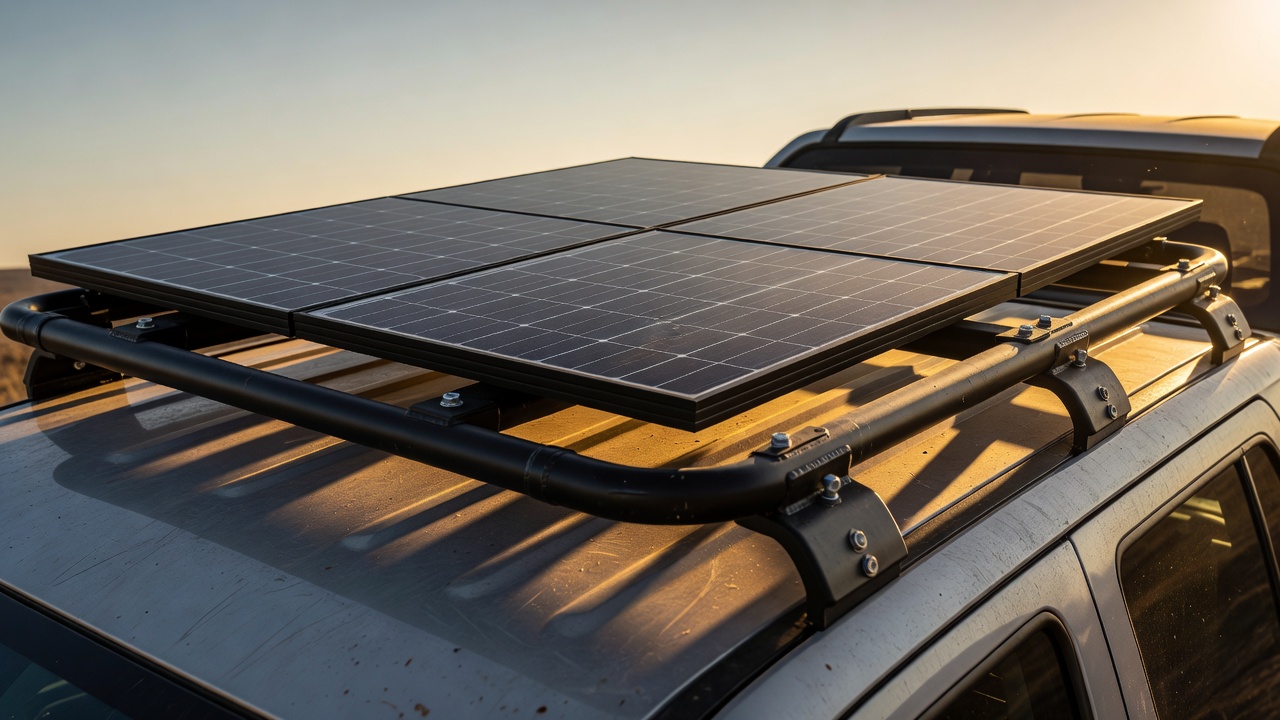
Realistic yield is often 3–5 equivalent peak sun hours per day, less in winter, shade or at high latitude. Flat roof panels lose output when the sun is low.
- 3
Mains hook-up
Useful at campsites. Mains wiring in a vehicle is specialist work and must meet local regulations.
- 4
Monitoring
A shunt-based battery monitor tells you state of charge honestly. Voltage alone is a poor guide, especially with lithium.
Choose storage you can maintain
Lithium iron phosphate (LiFePO4) batteries are light, tolerate deep discharge and hold voltage well. They also have limits: most must not be charged below about 0 °C unless they include internal heating or a battery management system that blocks cold charging. They need chargers with a matching profile. AGM batteries are heavier and offer less usable capacity but are simpler and tolerate cold charging better.
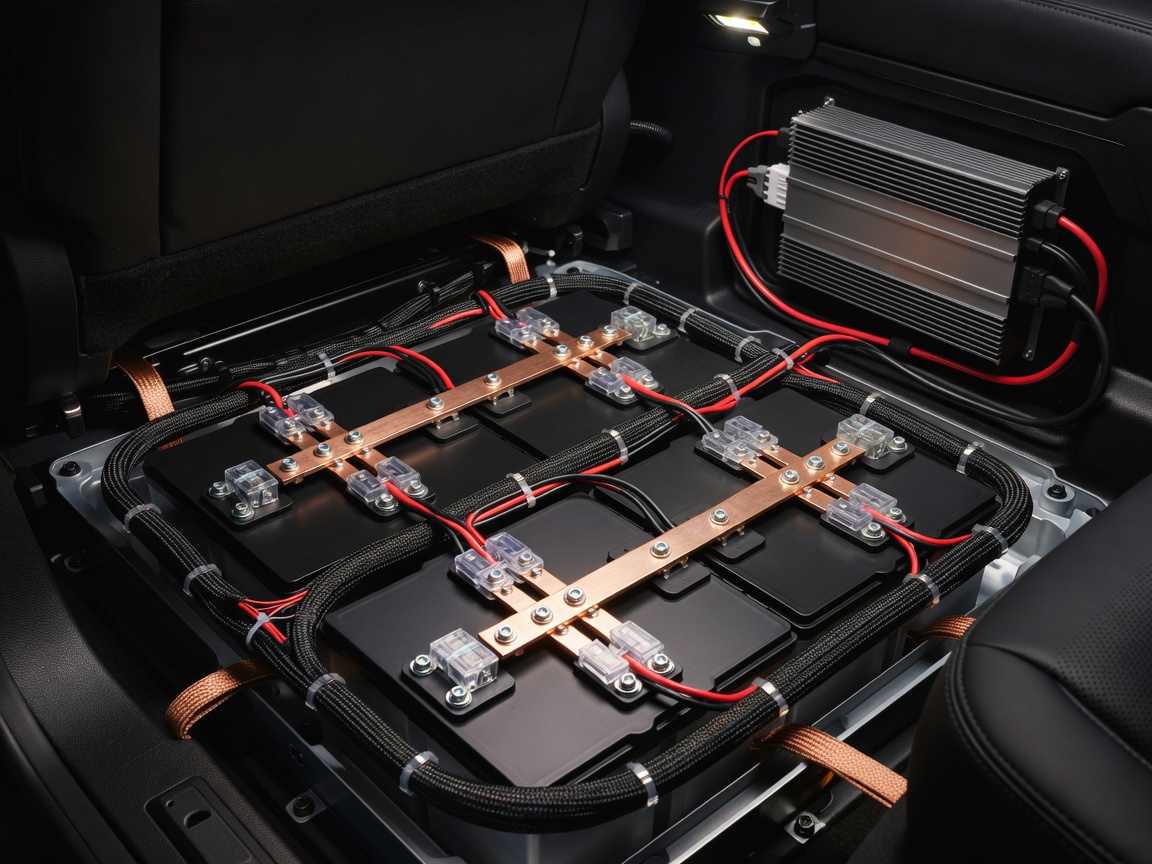
Whatever chemistry you choose, mount batteries securely in a protected location, ideally low and between the axles. A loose battery in a crash is a serious hazard.
Planning sequence
- Audit loads. Daily Wh, with seasonal extremes.
- Set autonomy. How many cloudy, stationary days must you cover?
- Size charging. DC-DC, solar and mains to replace demand.
- Size storage. Usable capacity for your autonomy target.
- Specify protection. Fusing, isolation, cable sizes and routing.
- Professional install or review. Have the design checked before connection.
- Test and log. Monitor a full week before a long trip.
Where professional input is essential
Low voltage does not mean low risk. A 12 V battery can deliver enough current to melt cable and start a fire if a conductor is undersized or unfused. Every positive cable should be protected by a correctly rated fuse close to the battery, and cables must be sized for both current and voltage drop over their length.
In Europe, BS EN 1648-1 covers 12 V direct-current installations in leisure accommodation vehicles, and BS 7671 Section 721 covers mains electrics in caravans and motor caravans. We recommend a qualified auto electrician for design review and final connection, and a qualified electrician for any 230 V or 120 V work.
Maintenance disclosure
Check terminal torque and look for heat discolouration monthly. Clean solar panels and inspect roof cable glands for leaks. Review battery monitor history for unexplained drain. Keep spare fuses of every rating used, and a printed copy of your system diagram in the vehicle.
Next system: the route
Power, water and fuel all come down to how far you will be from resupply. Plan the gaps.